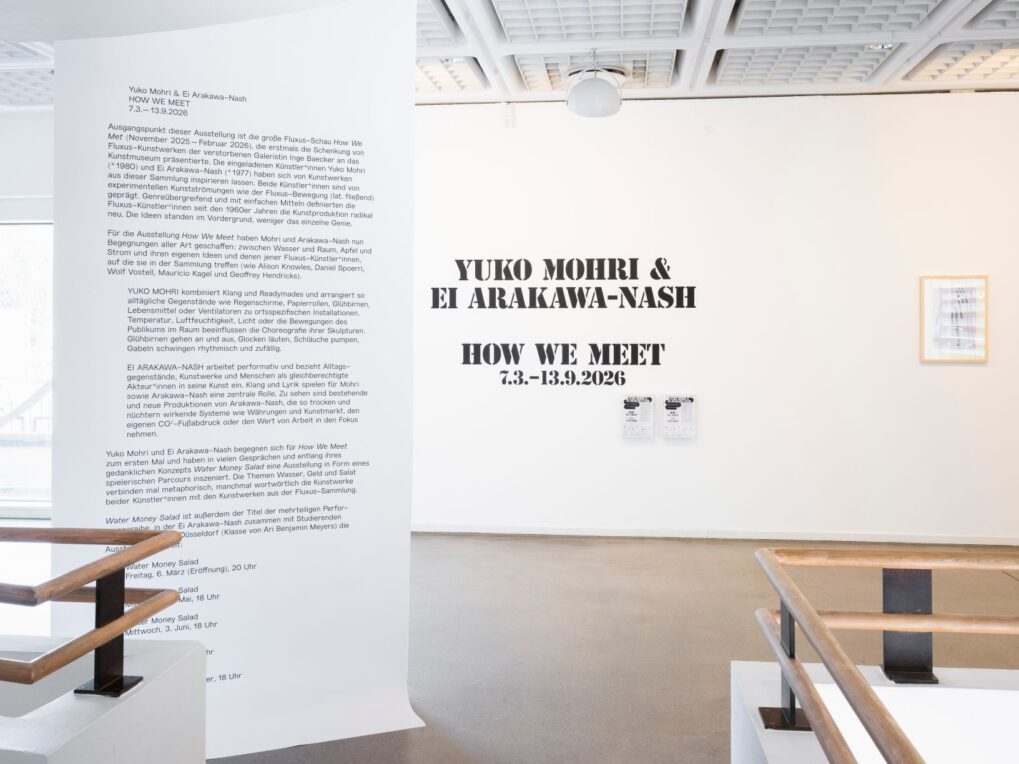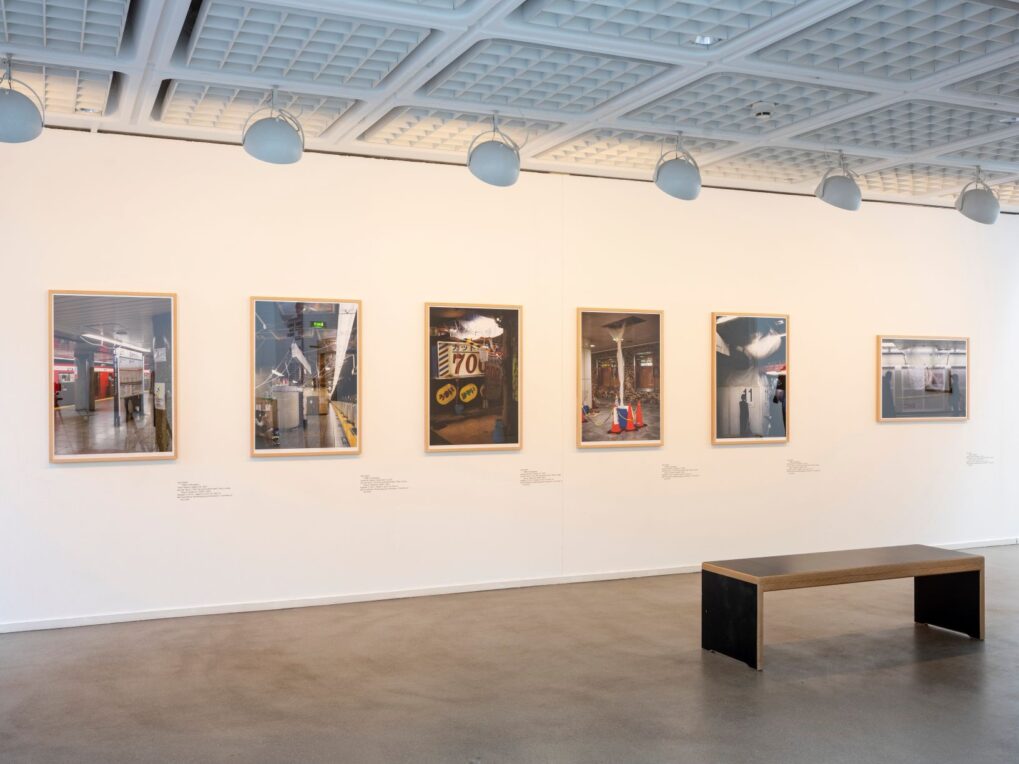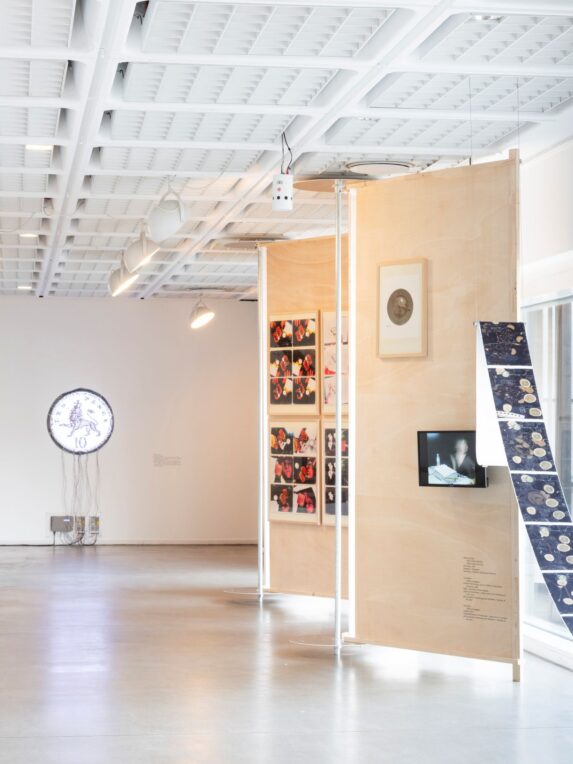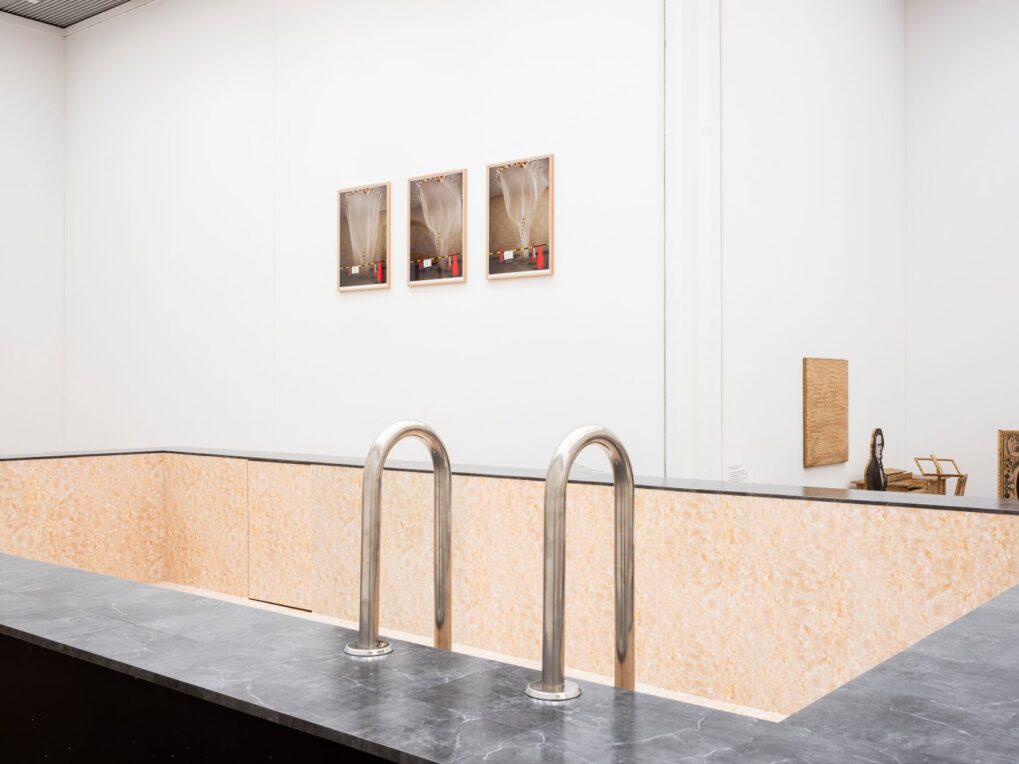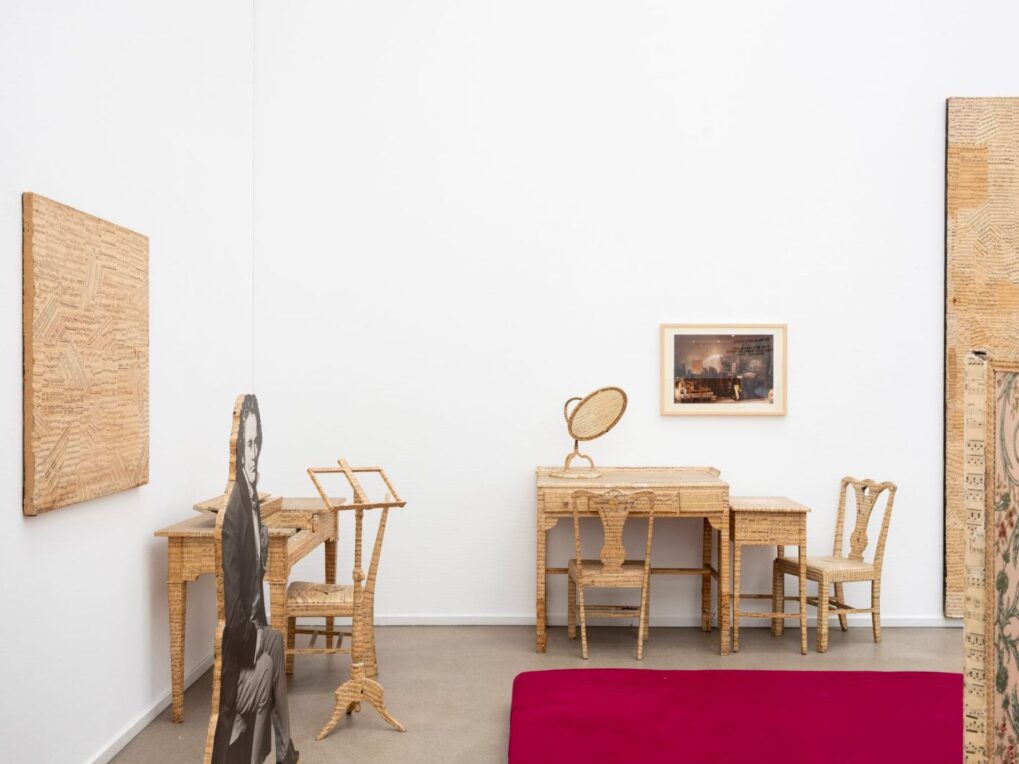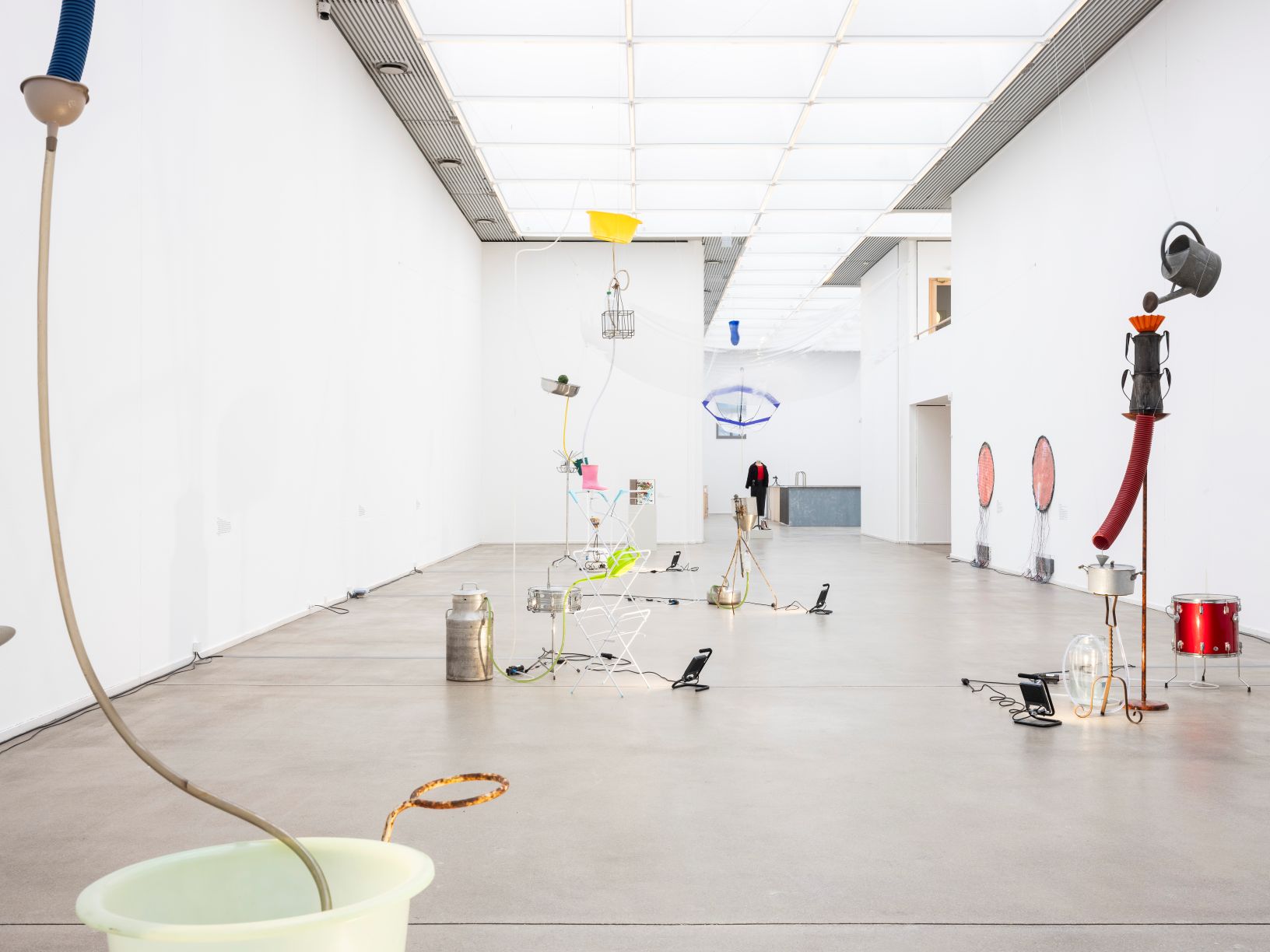
Ausgangspunkt dieser Ausstellung ist die große Fluxus-Schau How We Met (November 2025–Februar 2026), die erstmals die Schenkung von Fluxus-Kunstwerken der verstorbenen Galeristin Inge Baecker an das Kunstmuseum präsentierte. Die eingeladenen Künstler*innen Yuko Mohri (*1980) und Ei Arakawa-Nash (*1977) haben sich von Kunstwerken aus dieser Sammlung inspirieren lassen. Beide Künstler*innen sind von experimentellen Kunstströmungen wie der Fluxus-Bewegung (lat. fließend) geprägt. Genreübergreifend und mit einfachen Mitteln definierten die Fluxus-Künstler*innen seit den 1960er Jahren die Kunstproduktion radikal neu. Die Ideen standen im Vordergrund, weniger das einzelne Genie.
Für die Ausstellung How We Meet haben Mohri und Arakawa-Nash nun Begegnungen aller Art geschaffen: zwischen Wasser und Raum, Apfel und Strom und ihren eigenen Ideen und denen jener Fluxus-Künstler*innen, auf die sie in der Sammlung treffen (wie Alison Knowles, Daniel Spoerri, Mauricio Kagel und Geoffrey Hendricks).
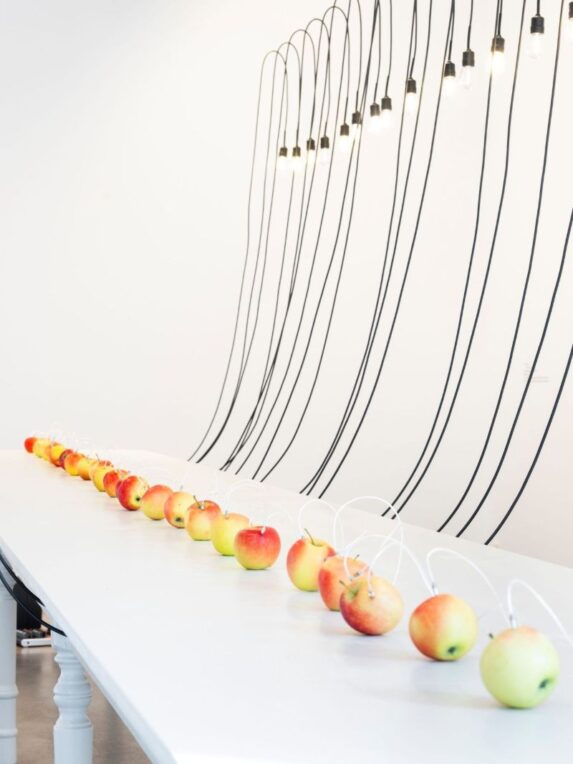
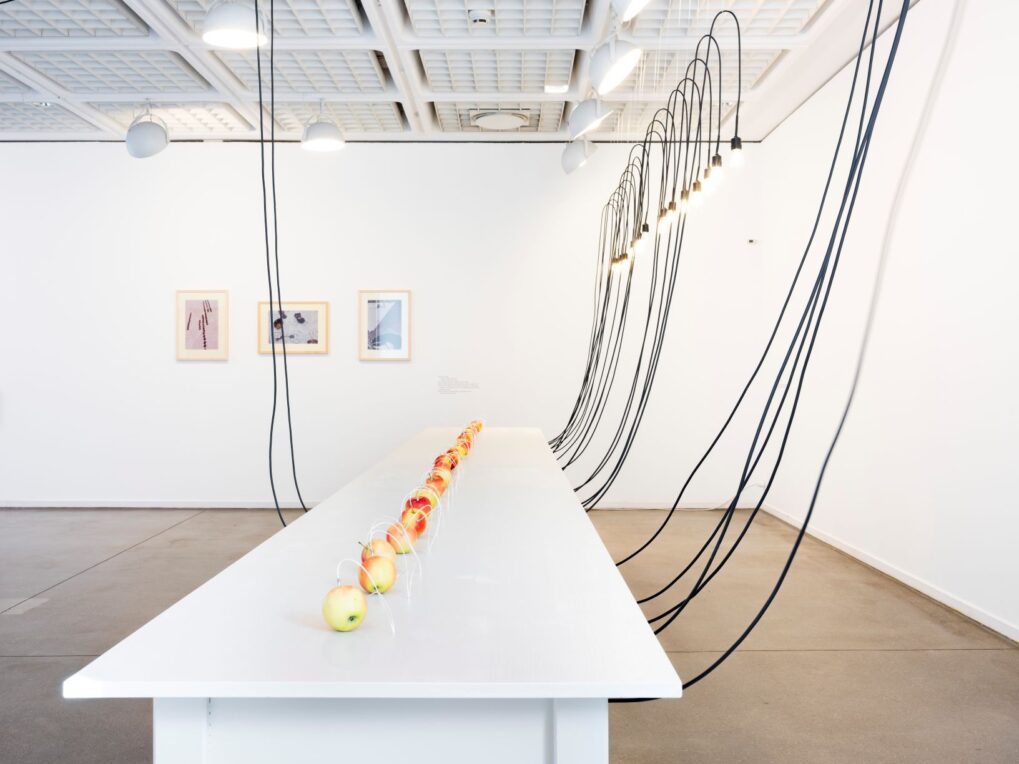
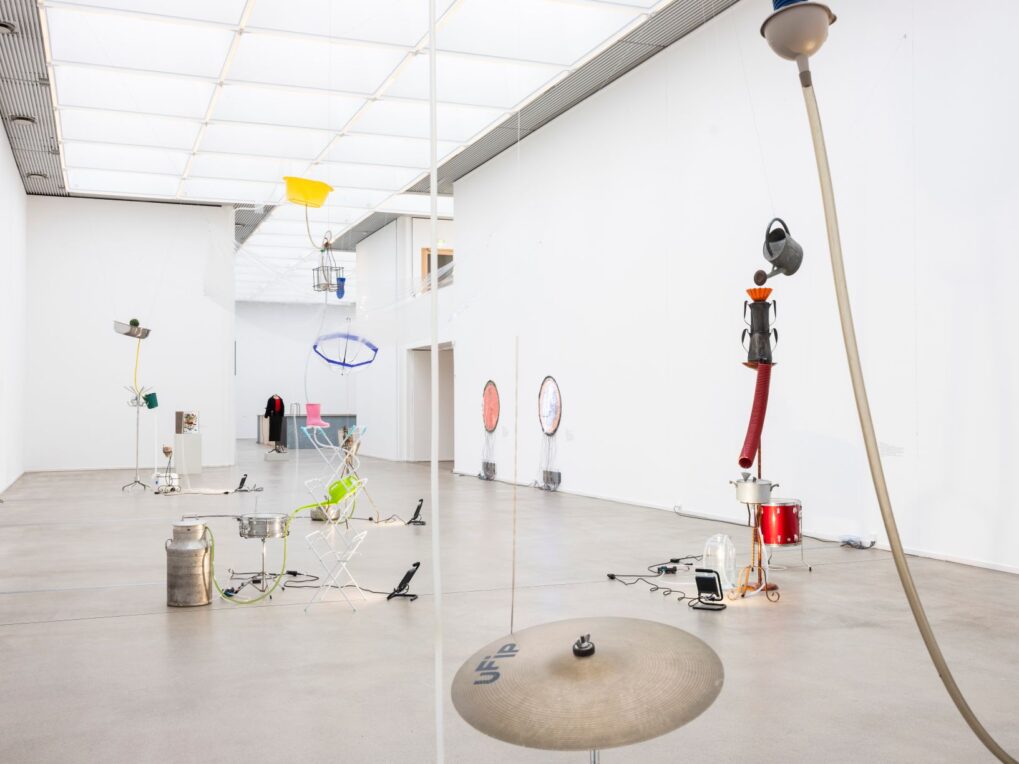
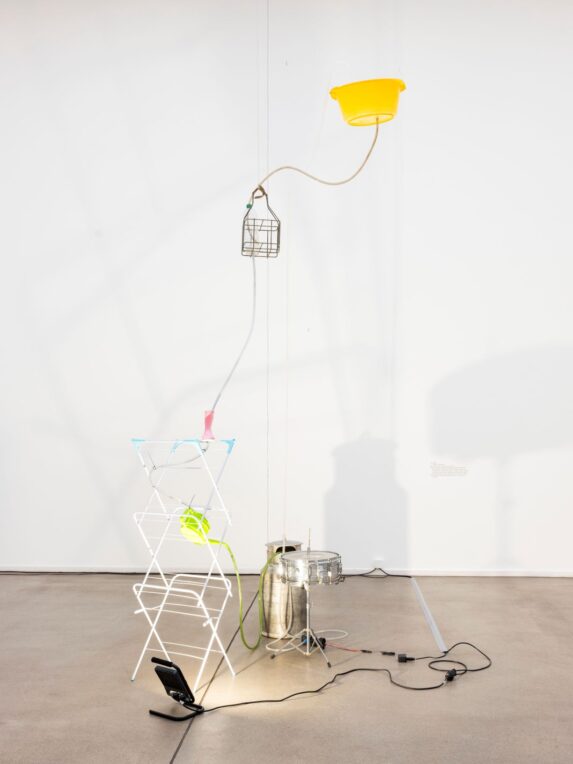
Yuko Mohri kombiniert Klang und Readymades und arrangiert so alltägliche Gegenstände wie Regenschirme, Papierrollen, Glühbirnen, Lebensmittel und andere organische Materialien oder Ventilatoren zu ortsspezifischen Installationen. Temperatur, Luftfeuchtigkeit, Licht oder die Bewegungen des Publikums im Raum beeinflussen die Choreografie ihrer Skulpturen. Glühbirnen gehen an und aus, Glocken läuten, Schläuche pumpen, Gabeln schwingen rhythmisch und zufällig.
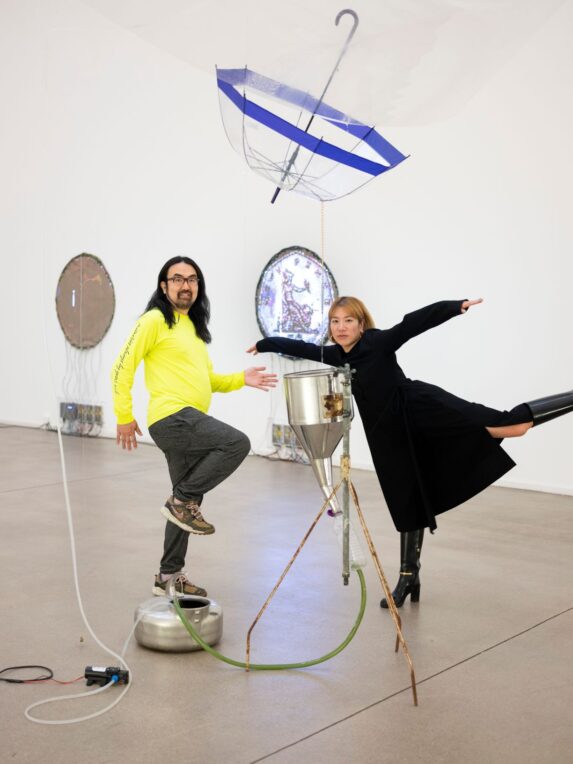
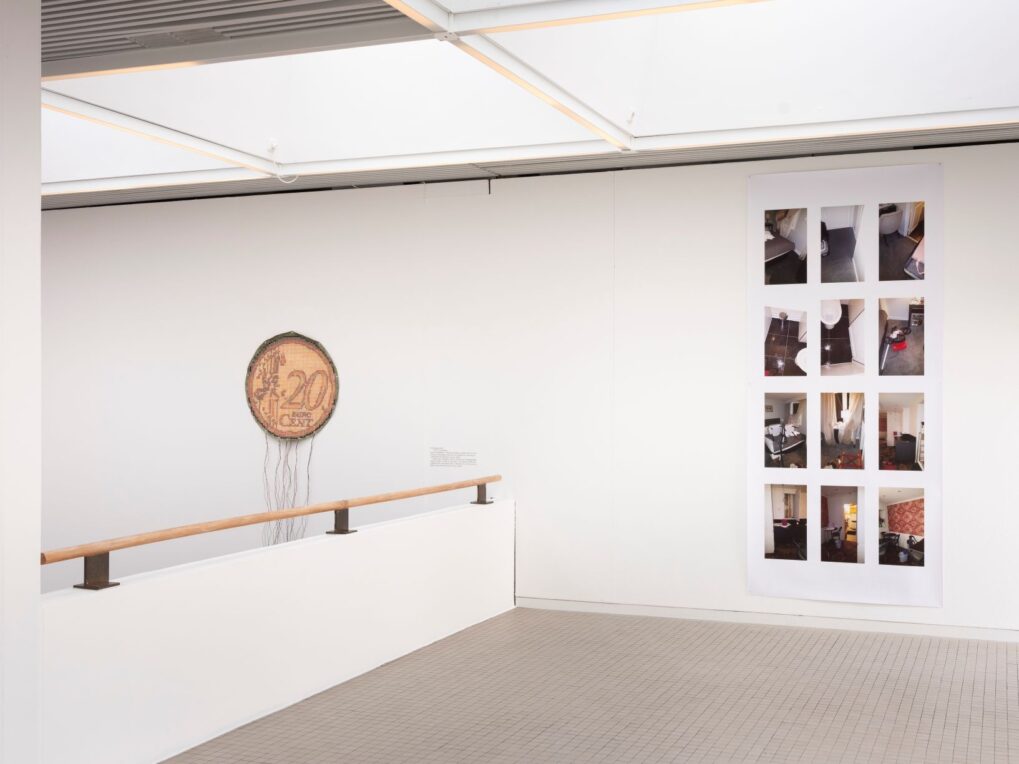
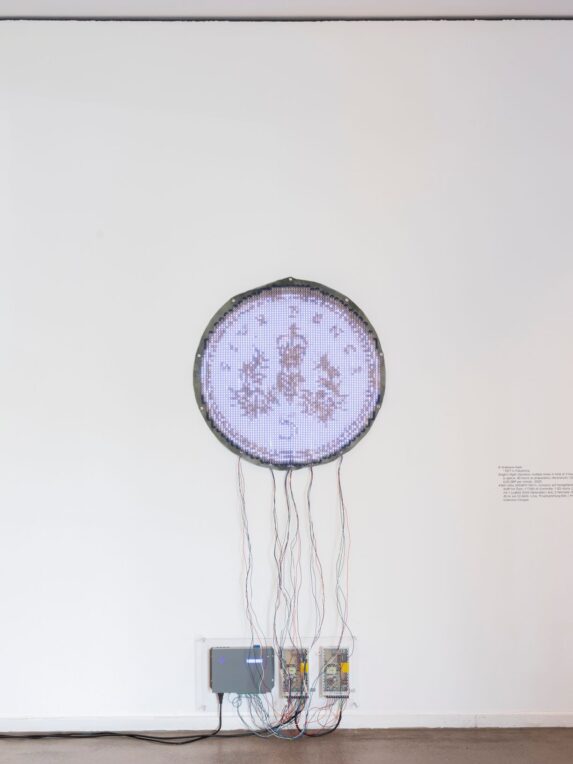
Ei Arakawa-Nash arbeitet performativ und bezieht Alltagsgegenstände, Kunstwerke und Menschen als gleichberechtigte Akteur*innen in seine Kunst ein. Klang und Lyrik spielen für Mohri sowie Arakawa-Nash eine zentrale Rolle. Zu sehen sind bestehende und neue Produktionen des Künstlers, die so trocken und nüchtern wirkende Systeme wie Währungen und Kunstmarkt, den eigenen CO2-Fußabdruck oder den Wert von Arbeit in den Fokus nehmen.
Auf der 60. Biennale in Venedig (2024) vertrat Yuko Mohri den japanischen Pavillon und zeigte dort ihre Ausstellung „Compose“. Ei Arakawa-Nash bespielt dort dieses Jahr den japanischen Pavillon.
Yuko Mohri und Ei Arakawa-Nash begegnen sich für How We Meet zum ersten Mal und haben in vielen Gesprächen und entlang ihres gedanklichen Konzepts Water Money Salad eine Ausstellung in Form eines spielerischen Parcours inszeniert. Die Themen Wasser, Geld und Salat verbinden mal metaphorisch, manchmal wortwörtlich die Kunstwerke beider Künstler*innen mit den Kunstwerken aus der Fluxus-Sammlung.
Water Money Salad ist außerdem der Titel der mehrteiligen Performancereihe, in der Ei Arakawa-Nash zusammen mit Studierenden der Kunstakademie Düsseldorf (Klasse von Ari Benjamin Meyers) die Ausstellung bespielt:
Water Money Salad Series 1
Freitag, 6. März (Eröffnung), 20 Uhr
Mittwoch, 13. Mai, 18 Uhr
Mittwoch, 3. Juni, 18 Uhr
Mittwoch, 1. Juli, 18 Uhr
Mittwoch, 2. September, 18 Uhr
* 1980 in Kanagawa, Japan. Lebt und arbeitet in Tokio.
Yuko Mohri schafft Installationen und Skulpturen, um sich auf Ereignisse zu konzentrieren, die sich ständig in Abhängigkeit von verschiedenen Bedingungen wie ihrer Umgebung verändern. Ihre dynamischen Installationen funktionieren wie Maschinen oder Miniatur-Ökosysteme. Auf der 60. Biennale in Venedig (2024) vertrat sie den japanischen Pavillon und zeigte dort ihre Ausstellung Compose, wo sie unter anderem eine Version der hier zu sehenden Installation Moré Moré (Leaky) zeigte. Yuko Mohri kombiniert Klang und Readymades und arrangiert so alltägliche Gegenstände wie Regenschirme, Papierrollen, Glühbirnen, Lebensmittel oder Ventilatoren zu ortsspezifischen Installationen. Temperatur, Luftfeuchtigkeit, Licht oder die Bewegungen des Publikums im Raum beeinflussen die Choreografie ihrer Skulpturen. Glühbirnen gehen an und aus, Glocken läuten, Schläuche pumpen, Gabeln schwingen rhythmisch und zufällig.
* 1977 in Fukushima, Japan. Lebt und arbeitet in Los Angeles.
Ei Arakawa-Nash arbeitet performativ und bezieht Alltagsgegenstände, Kunstwerke und Menschen als Akteur*innen in seine Kunst ein, wobei alle gleichberechtigt sind. Musik und Lyrik spielen in seinen Installationen und Performances eine zentrale Rolle, seine Inspiration zieht er aus künstlerischen Strategien der Gutai-Gruppe und der Fluxus-Bewegung. In der Ausstellung zeigt Arakawa-Nash eine Serie der LED-Paintings (2020) und neue Produktionen, die Systeme wie Währungen und Kunstmarkt, den eigenen CO2-Fußabdruck oder den Wert von Arbeit in den Fokus nehmen. Unter dem Titel Water Money Salad entwickelt Arakawa-Nash zusammen mit Studierenden der Kunstakademie Düsseldorf (Klasse von Ari Benjamin Meyers) eine mehrteilige Performancereihe zur Ausstellung. Als Nachfolger von Yuko Mohri, bespielt Ei Arakawa-Nash 2026 außerdem den japanischen Pavillon der 61. Biennale in Venedig.
FÖRDERUNG UND UNTERSTÜTZUNG
Die Ausstellung Yuko Mohri & Ei Arakawa-Nash — How We Meet wird von der Stadt Bochum und dem Japanischen Kulturinstitut Köln, der Deutschlandvertretung der Japan Foundation, gefördert.
ENGLISH
Yuko Mohri & Ei Arakawa-Nash — How We Meet
With works from the Fluxus collection of the Kunstmuseum Bochum by Alison Knowles, Daniel Spoerri, Wolf Vostell, Mauricio Kagel and Geoffrey Hendricks.
The starting point for this exhibition is the major Fluxus show How We Met (November 2025–February 2026), which presented the donation of Fluxus artworks by the late gallery owner Inge Baecker to the Kunstmuseum. The invited artists Yuko Mohri (* 1980) and Ei Arakawa-Nash (* 1977) drew inspiration from works of art in this collection. Both artists are influenced by experimental art movements such as Fluxus (Latin for “flowing”). Since the 1960s, Fluxus artists have radically redefined art production in a cross-genre manner and with simple means. Their focus was on ideas rather than individual genius.
In How We Meet, Mohri and Arakawa-Nash have created new encounters of all kinds: Between water and space, apples and electricity, their own ideas, and those of the Fluxus artists they encountered in the collection (such as Alison Knowles, Daniel Spoerri, Wolf Vostell, Mauricio Kagel and Geoffrey Hendricks).
Yuko Mohri combines sound and readymades, arranging everyday objects such as umbrellas, paper rolls, light bulbs, food or organic materials, and fans into site-specific installations. Temperature, humidity, light, and the movements of the audience in the room influence the choreography of her sculptures. Light bulbs turn on and off, bells ring, hoses pump, forks swing rhythmically and randomly.
Ei Arakawa-Nash works in a performative way, incorporating everyday objects, artworks, and people as equal actors in his art. Sound and poetry play a central role for both Mohri and Arakawa-Nash. On display are existing and new productions by Arakawa-Nash that focus on seemingly dry and sober systems such as currencies and the art market, one’s own carbon footprint, and the value of labor.
Yuko Mohri represented the Japanese pavilion at the 60th Venice Biennale (2024), where she presented her exhibition ‘Compose’. Ei Arakawa-Nash is exhibiting at the Japanese pavilion this year.
For How We Meet Yuko Mohri and Ei Arakawa-Nash come together for the first time. Through many conversations, and based on their conceptual idea of Water Money Salad, they have staged an exhibition in the form of a playful parcours. Water Money Salad inspire themes which connect the artworks of both artists with the works from Kunstmuseum Bochum’s Fluxus collection, sometimes metaphorically, sometimes literally.
Water Money Salad is also the title of the multi-part performance series, in which Ei Arakawa-Nash together with students from the Düsseldorf Art Academy (Ari Benjamin Meyers‘ class), will perform at the exhibition:
Water Money Salad Series 1
Friday, March 6 (opening), 8 p.m.
Water Money Salad Series 2
Wednesday, May 13, 6 p.m.
Water Money Salad Series 3
Wednesday, June 3, 6 p.m.
Water Money Salad Series 4
Wednesday, July 1, 6 p.m.
Water Money Salad Series 5
Wednesday, September 2, 6 p.m.
YUKO MOHRI (Born in 1980 in Kanagawa, Japan. Lives and works in Tokyo)
Yuko Mohri creates installations and sculptures to focus on events that are constantly change depending on various conditions, such as their surroundings. Her dynamic installations function like machines or miniature ecosystems. Mohri presented her exhibition Compose in the Japanese Pavilion at the 60th Venice Biennale (2024), which included a version of the installation Moré Moré (Leaky) shown here. Yuko Mohri combines sound and readymades— arranging everyday objects such as umbrellas, paper rolls, light bulbs, organic matter, food or fans—into site-specific installations. Temperature, humidity, light or the movements of the audience in the room all influence the choreography of her sculptures. Light bulbs turn on and off, bells ring, hoses pump, forks swing rhythmically and randomly.
EI ARAKAWA-NASH (Born 1977 in Fukushima, Japan. Lives and works in Los Angeles)
Ei Arakawa-Nash works with installation and performance, incorporating everyday objects, artworks and people as actors in his art—where all participants are treated as equal. Music and poetry play a central role in his installations and performances, drawing inspiration from the artistic strategies of the Gutai group and the Fluxus movement. In this exhibition, Arakawa-Nash presents a series of LED paintings (2020) and new productions that focus on systems such as money and the art market, his own carbon footprint, and the value of labour. Under the title Water Money Salad, Arakawa-Nash is collaborating with students from the Düsseldorf Art Academy (Ari Benjamin Meyers‘ class) to develop a multi-part performance series for the exhibition. As Yuko Mohri’s successor, Ei Arakawa-Nash will also be exhibiting at the Japanese Pavilion at the 61st Venice Biennale in 2026.
FUNDING AND SUPPORT:
City of Bochum and the Japanese Cultural Institute Cologne, the German representative office of the Japan Foundation.